By Harrie Dearing. First published on harriedearingart.com.
So, we have a space. The question that came next: what do we actually want this place to be set up?
For Steve and me, that question had one answer before we’d even finished asking it. Accessibility.
Art needs to be accessible. Accessible to people, real people , and that has to include disability. It’s not an add-on for us, or a box to tick. It’s personal and heartfelt.
Why this is personal
It’s a fairly quietly known fact that I am a disabled artist. I live with Functional Neurological Disorder, FND , a condition where the brain and body struggle to send and receive signals properly. There’s nothing structurally “wrong” or damaged; it’s more like a software glitch than a hardware fault. But the symptoms it causes are very physical and very unpredictable, and they’ve shaped my life and my art for a long time now.
Alongside being an outsider artist, FND has also been the cause of a lot of the access issues I’ve personally faced within the art industry. Studios, galleries, and exhibition spaces are so often designed without disabled artists in mind at all, and when accessibility is missing, it’s not abstract. It’s the difference between being able to make work and not.
What that looks like in practice
We’re proud that Arclite House gives us a genuine foundation to build accessibility into the studio from day one:
- Step-free access throughout
- A wide, open-plan layout rather than a maze of small, awkward rooms
- Disabled restroom facilities on site
Steve and I are taking a mindful approach to how we kit the space out, too. We’re prioritising flexible workspaces and an open-plan setting that maximises freedom of movement and lets the space adapt to whoever’s using it, rather than forcing artists to adapt to the space. That thinking runs right down to the equipment we’ve chosen, for example:
- Adaptable painting spaces, with a mix of easel types on offer, H-frame studio easels, table-top easels, and sawhorse stands for raised, horizontal canvas work, so artists can work in whatever position suits their body and their process, not just whatever happens to be standing in the corner.
- A large communal workbench at the centre of the space, set on wheels so it can be moved easily to accommodate different projects and different people, rather than being fixed in one spot that only works for some.
- Adaptive lighting, including light boxes and easel-mounted lights, so artists can adjust lighting to their own needs rather than working under one fixed setup for the whole room.
None of this is about ticking boxes on an access audit. It’s about actually sitting down and asking what different bodies and different ways of working need, and then building the studio around the answer.
And then there’s Frankie
When you visit the studio, you’ll also come across a very special spot: Frankie’s bed.
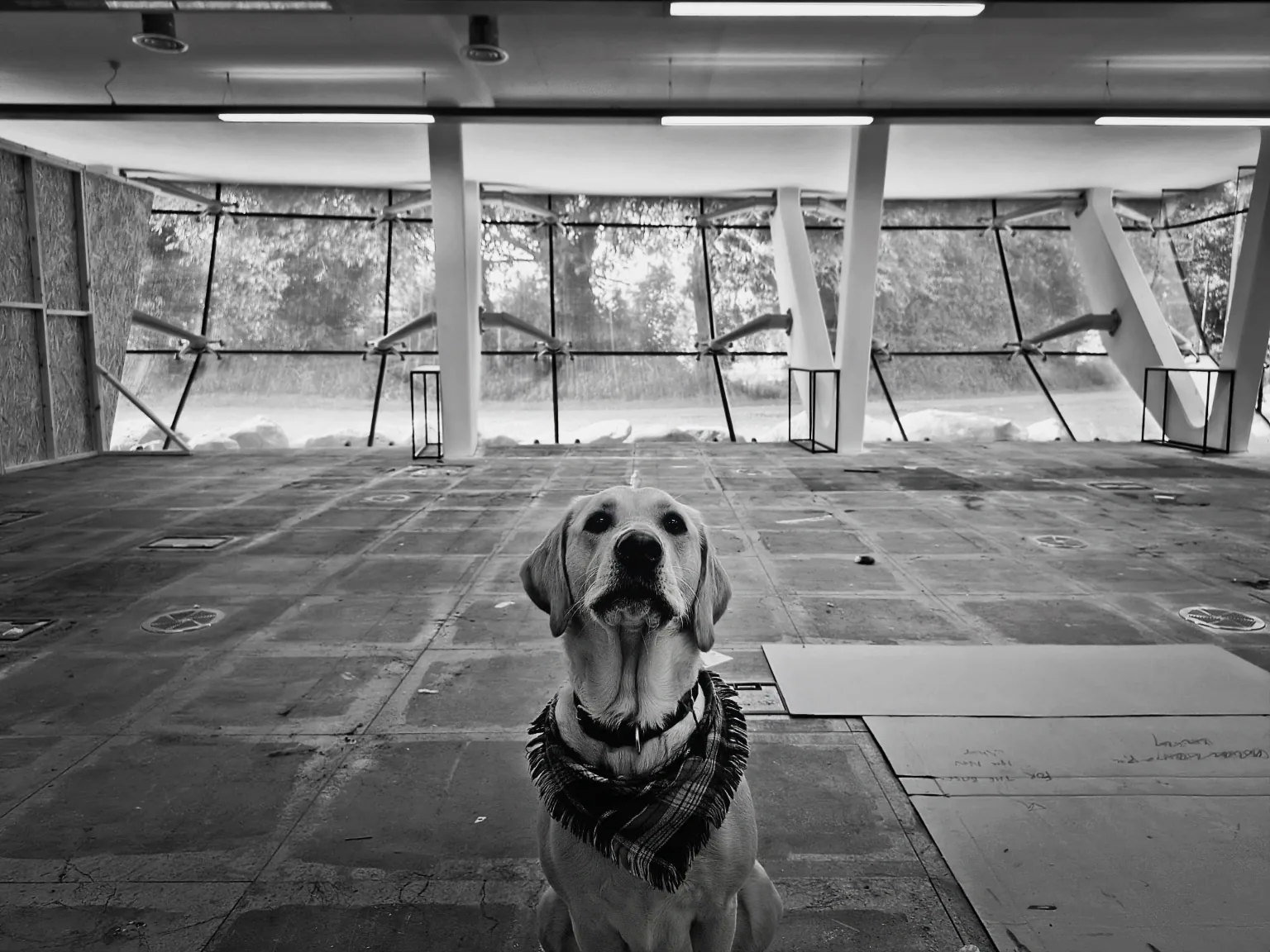
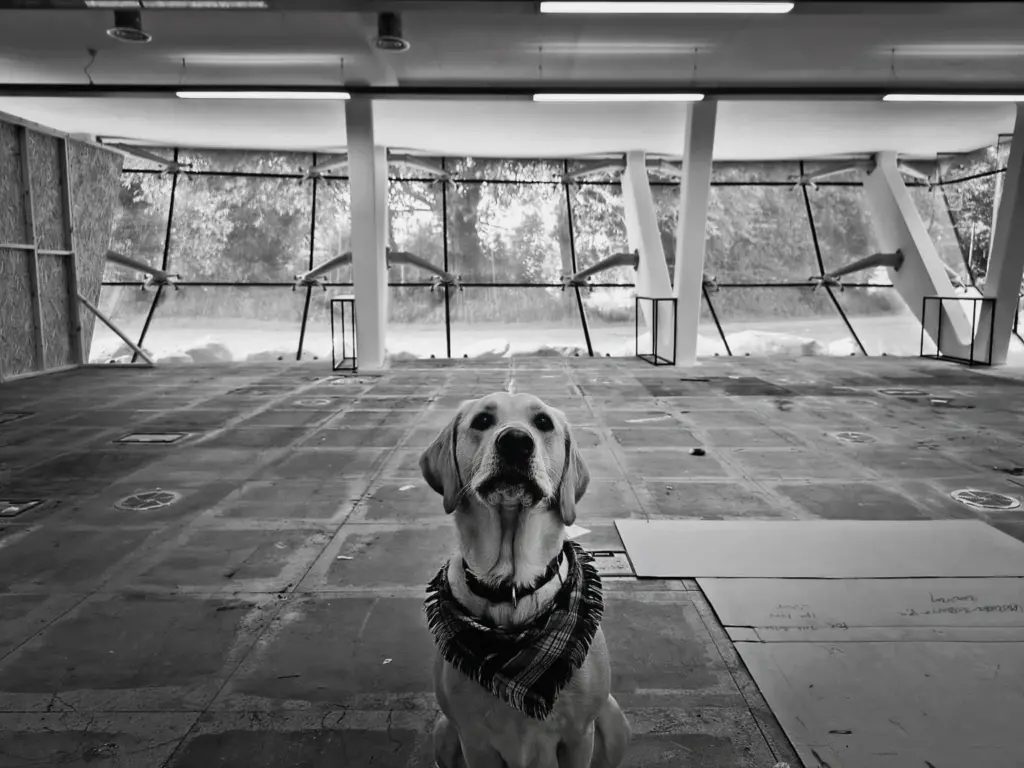
Frankie is my assistance dog. She’s the goodest of doggos, and she’s always ready with cuddles and tennis balls in equal measure. Having Frankie in the studio isn’t a nice-to-have , she’s part of how I’m able to work, and Studio Brut is built to have her there as a matter of course, not as an exception someone has to ask permission for.
Accessible by design, not by accident
This isn’t about compliance. It’s about building a studio where disabled outsider artists don’t have to fight for a seat at the table, because the table was built with them in mind from the start.
This is what we mean when we say art needs to be accessible to real people. Studio Brut is our attempt to actually do something about it, not just say it.
More on the space, the programme, and how to get involved is coming soon. Follow studiobrut.art on Instagram on Instagram to keep up with it all.
Harrie x