By Harrie Dearing. First published on harriedearingart.com.
It’s the day after Network of Art: a very cold, wet and windy Saturday. I’m snuggled up with Frankie the doggo and Freddy the kitty, hiding from the storm brewing outside, and still pondering a question I was asked last night.
Last night I was exhibiting some of my pagan crafts side by side with my large-scale fine art paintings. One painting in particular, She Sore Red, caught the eye of a fellow local artist. She asked me: where does your artwork come from, really, what’s at the core of what you make?
Now, that’s a tricky question when you’re on the spot, three hours into an event, after a long week of prep and an all-nighter get-in the night before. I stood there, stunned by the most poignant question I’d been asked all night. Grateful that someone had not only taken the time to ask it, but was patient while my admittedly very tired brain struggled to find the words.
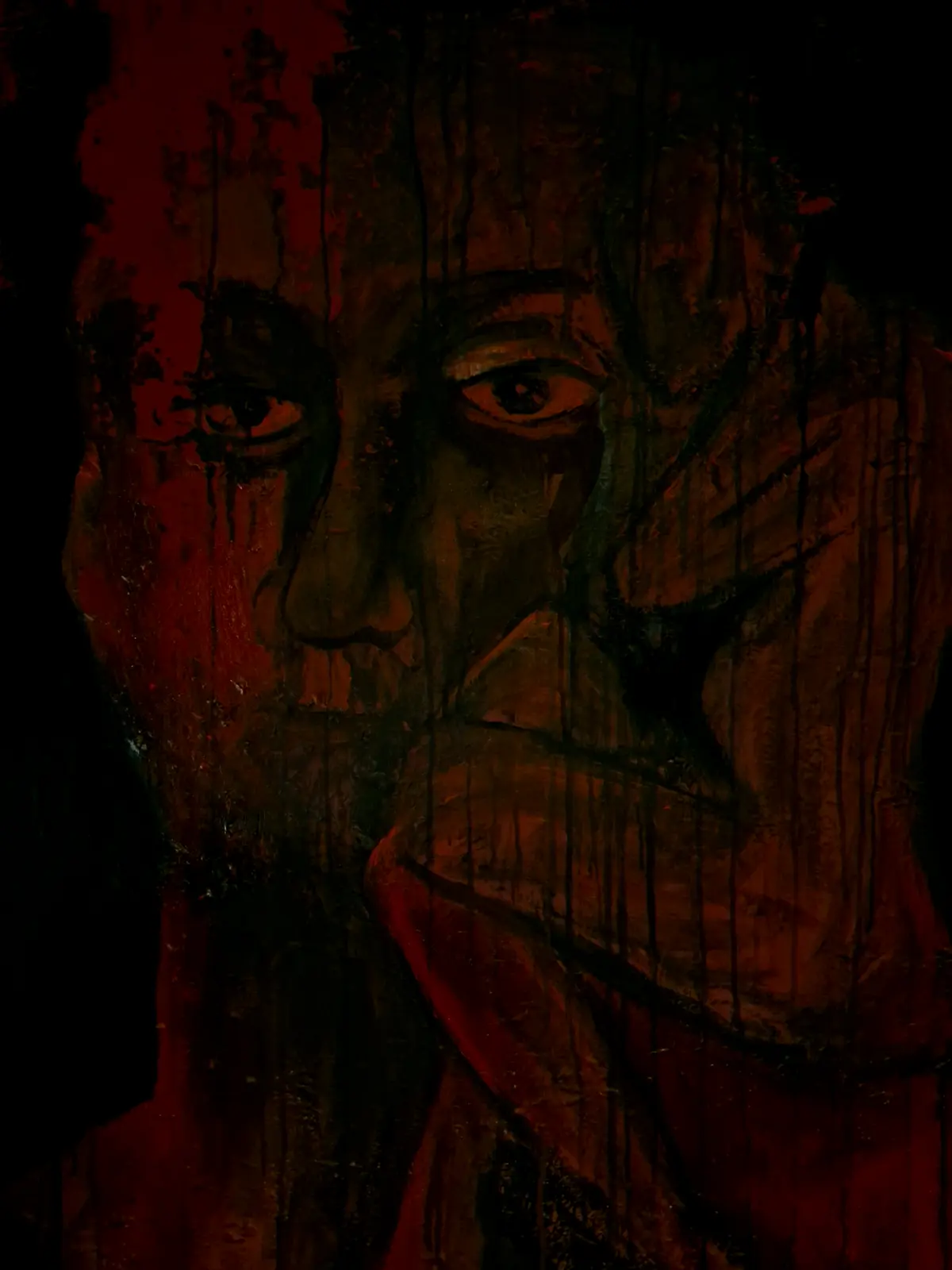
She Sore Red, Acrylic & oil on canvas. 100cm x 120 cm
… It’s alchemy
The words “It’s alchemy” bumbled out of my mouth. That’s at the core of it. That’s why I create, why I paint.
From a tired brain, on the spot, came a new answer. When I’ve been asked similar questions in the past, I’ve usually talked about storytelling. Painting is my way of telling stories, i’d say. But on the spot, my tired brain surprised me.
A key piece of context here is that we were standing not only before my fine art paintings, but before the tools and creations of my pagan crafts, and in my thinking there’s a distinct link between the two. Alchemy is a key part of my pagan practice, but it isn’t a word I can recall ever using to define my art in public. Only in quiet, intimate conversations with people as spiritually minded as myself, mostly in reference to the process of paint making.
So in a way, this was a very naked thought. Funny how showcasing our art has a habit of pulling these things out of us.
Making the invisible real
As the conversation continued, I shared that I have aphantasia: the inability to create a mental image. So when it comes to my artworks, unless I take the chaos inside my head and put it onto canvas, it never fully reaches that point of manifestation. To process life’s events and trauma, memories and hope, I feel a need to make them into something I can see. Something I can touch.
An alchemical transformation: from brain chemicals, thoughts bouncing around my head, sensations and experiences, into something tangible. Something real, outside of me, that I can interact with. It’s only then that I feel I can tackle these things, overcome them, and learn to find love or beauty within them.
All the while, in the back of my mind, I was thinking about how many of the ritual practices in my paganism are exactly this same kind of alchemy, only working outside in, rather than inside out. The revelation that they’re mirrors of one another has taken me aback.
It takes amazing little moments like this, when one artist asks another a question that cuts through all the fluff, to get to the little seed beneath the work.
Alchemy in the making
And if I keep following this line of thinking, it leads straight to the most obvious demonstration of alchemy in my work: making my own paints.
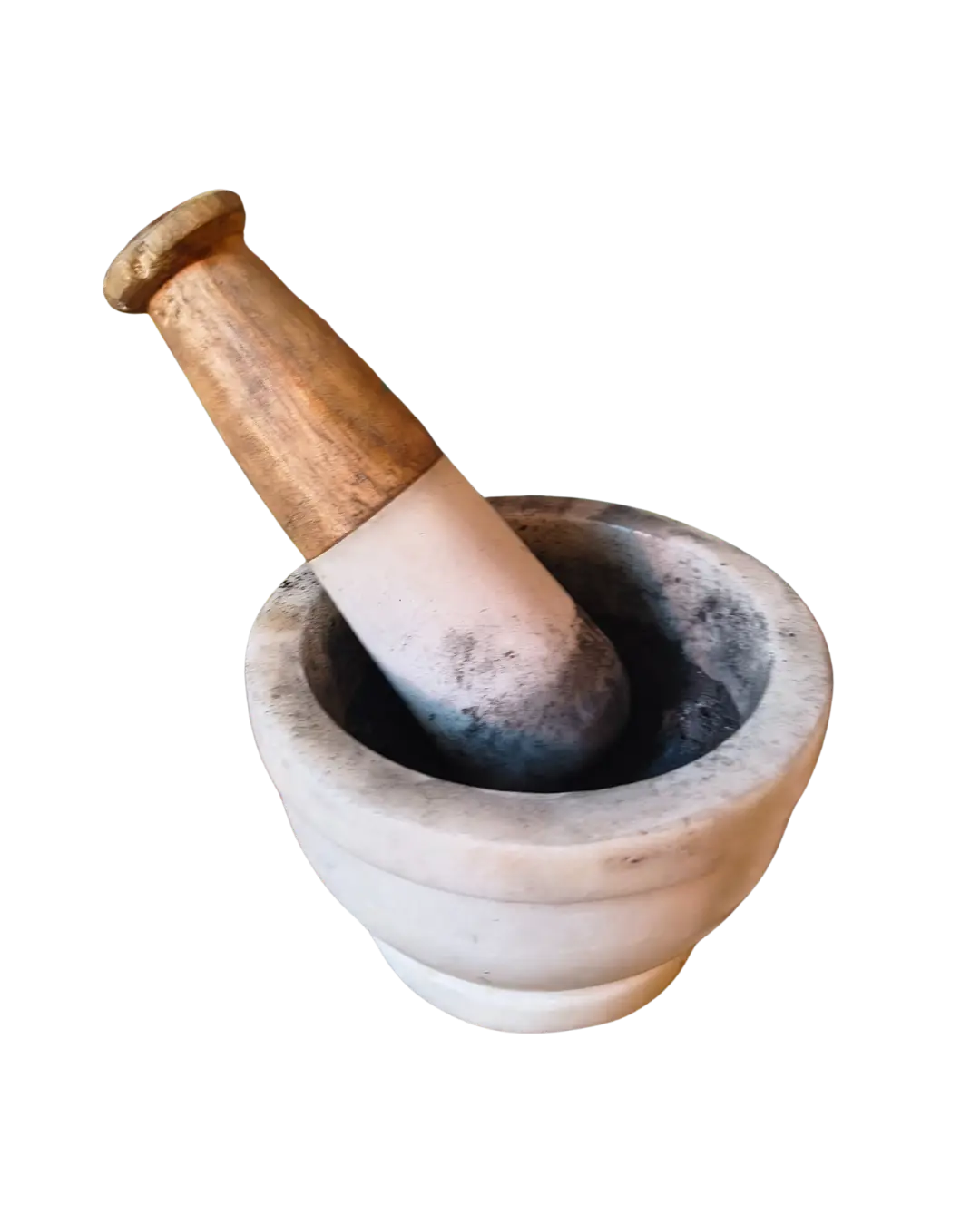
I work with a combination of natural and synthetic pigments, bound with mediums such as linseed oil and marble dust, or acrylic binder and marble dust. Loose powders and liquids, brought together by hand, slowly become something entirely new: a rich, living colour, ready to carry my stories onto the canvas. It’s transformation in its most literal sense.
Hand mulling the paints is a deeply meditative act. Round and round, grinding pigment into binder, the rhythm of it slows everything down. My busy mind quietens, and I’m present with the materials in my hands. In a way, the alchemy begins long before a brush ever touches the canvas. Every painting carries that first quiet transformation within it.
The seed that brings it all home
I’m beyond grateful for this conversation, and it’s got me reflecting on my wider body of work. My art is often seen as very eclectic. I work across a broad range of styles, and many of my collections look distant from one another. And yet this seed, this idea of alchemy, brings them all home.
From there, we got talking about art’s amazing power to conjure stories in the viewer without a single word, and we shared our admiration for what visual art can do.
The power of finding beauty in dead things.
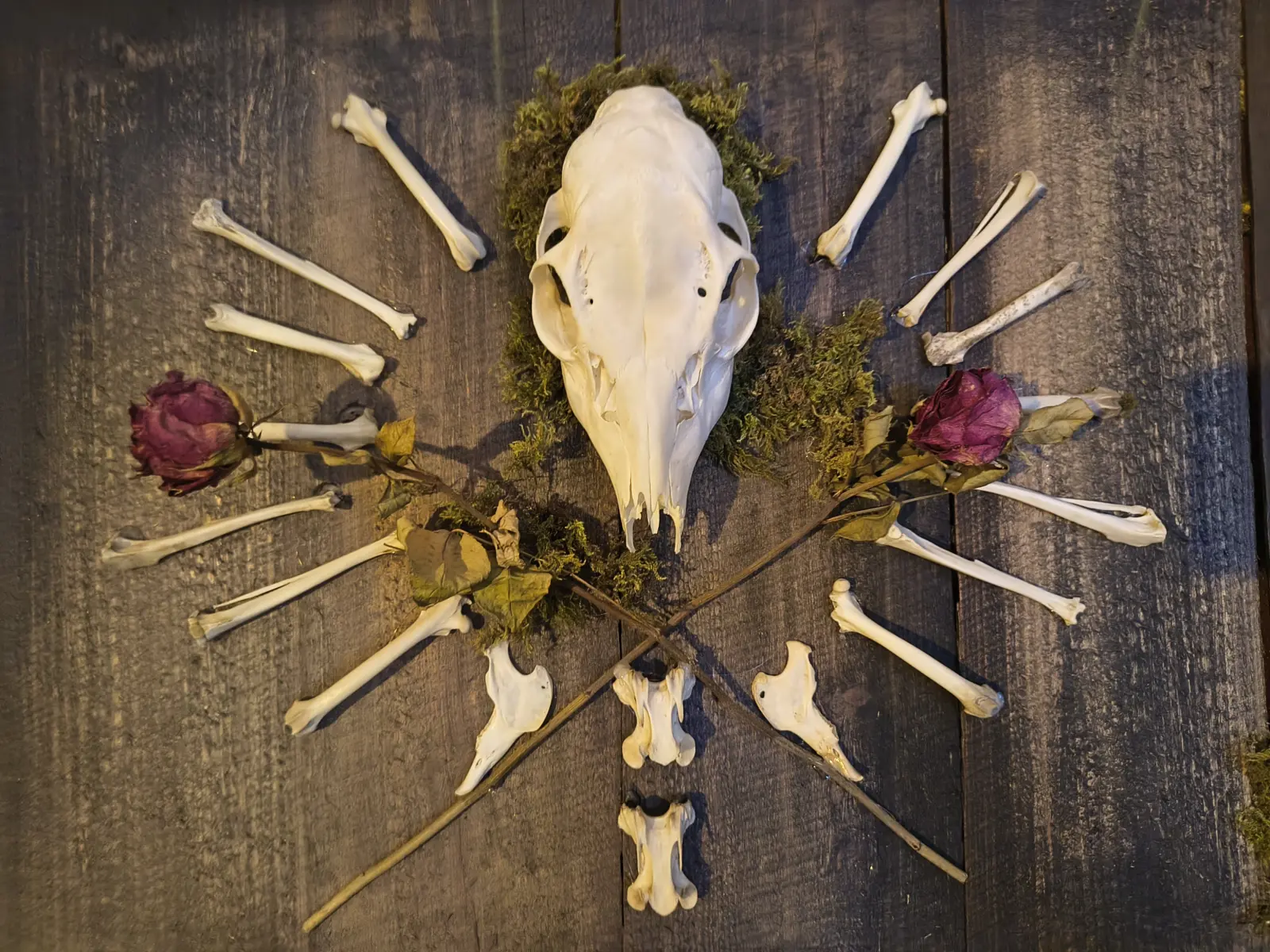
Our conversation then wandered into my fascination with finding beauty in “dead things”. Many of the pagan crafts I’d brought along were made from animal bones, dried herbs and dead flowers, and I found myself saying something I don’t often say out loud: this is how I find comfort in grief.
I carry a lot of unprocessed grief and loss. Some of it I’m still not ready to look at directly. But when I hold a bone in my hands, or bind a bundle of dried flowers, I can sit with death gently, on my own terms. These remnants of life are fragile and quiet and, to me, so beautiful. Finding that beauty is its own kind of alchemy: turning the thing that hurts into something I can hold, and even love.
I’ve learned that when I take the time to look at what I fear, really look, the darkness starts to soften. There’s beauty there, waiting to be found. And once I’ve found it, that fear doesn’t hold quite so much power over me anymore.
Back to the question . . .
So, where does my artwork come from? It turns out the answer was there all along, waiting for someone to ask the right question at the right moment. It’s alchemy.
Traditionally, alchemy is the ancient art of turning base metals into gold, the forerunner of the chemistry we know today. For me, the base metal is the chemistry inside my own head: neurons, chemicals, memory and feelings. The gold is the painting. It’s the transformation of all that into tangible matter outside of myself, something I can see, hold, and learn to love. Whether it’s pigment mulled into oil, a bundle of dried flowers bound by hand, or a memory finally given shape on canvas, it’s all the same work.
The storm is still rattling the windows as I write this. Frankie is snoring, Freddy has claimed the warmest spot on the sofa, and I’m sitting with an understanding of my own practice that I didn’t have this time yesterday. To the artist who asked me that question: thank you. You gave me a gift I don’t think either of us realised you were giving.
And to you, reading this, I’d love to turn the question around. What’s at the core of what you make, or what you’re drawn to? Is there something you’ve had to transform into tangible matter before you could face it?
Goodnight x